Introduction
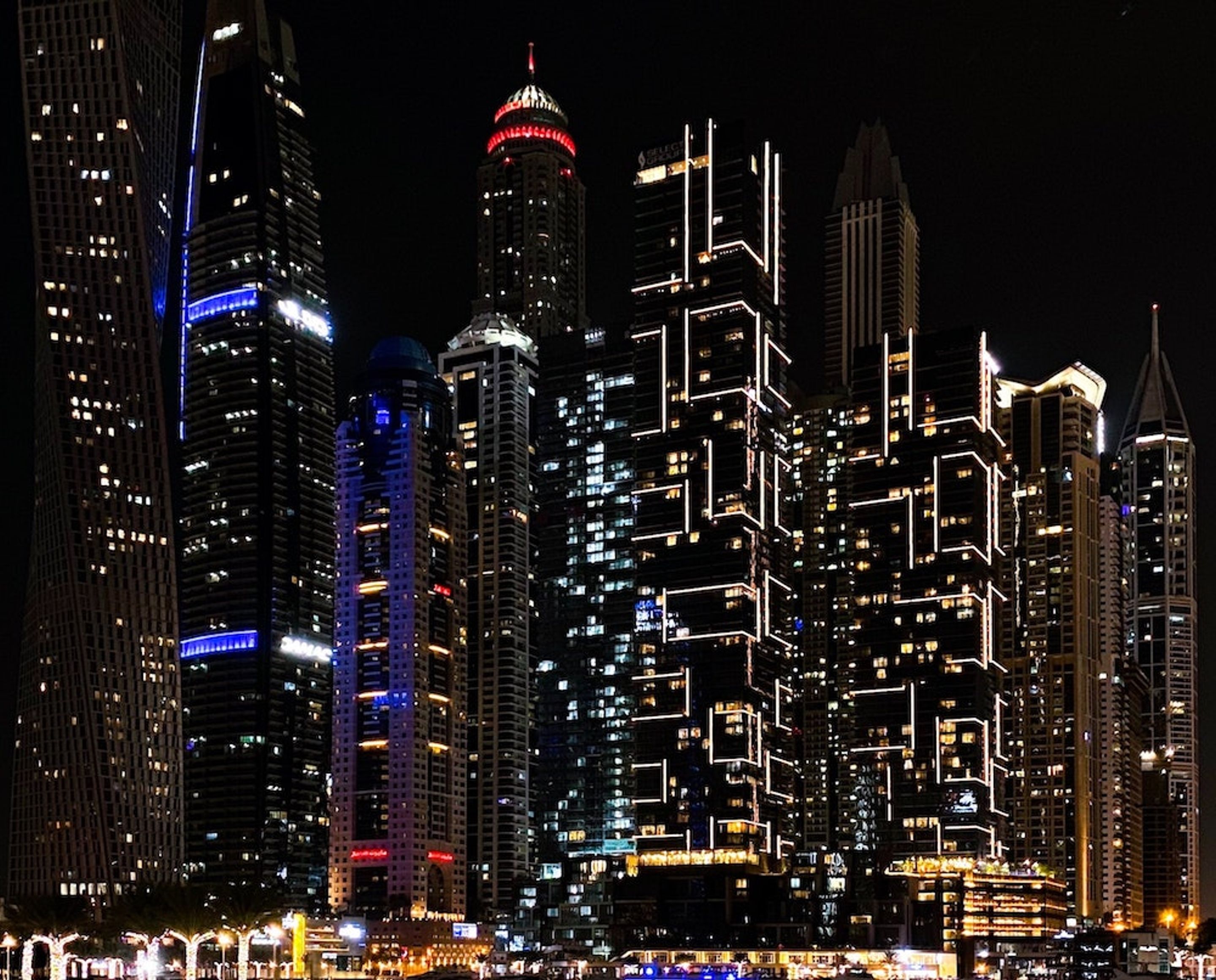
When it comes to façade lighting, finding the right design to suit your property may seem like a simple matter of adding lights to the building’s surface. However, this is far from reality. In order to light a building’s façade well, it takes a number of considerations that will set the final design apart from the crowd. Here are the key design components to consider when embarking on profound architectural façade lighting using pixel LEDs..
Façade Lighting will Shape Community and Culture
Façade lighting needs to comprise more than merely lighting up a structure. Marketing the building to customers who are invited into the facility at night will require a transformative design that is alluring and entertaining. A façade that piques interest will go a long way, helping to boost the revenue of the area by enhancing its aesthetic appeal and prestige. Facades will therefore need to be innovative in order to add cultural value to the area and provide incentives for visitors to come by. Not to mention, it will also boost the real estate of the area as a whole.
Environmental Responsibility
Perhaps one of the most sought after traits in a company’s culture is its environmental responsibility. This is absolutely essential and will need to be balanced out with the cultural value of the building façade and area in general. This concern can best be addressed by opting for lighting systems that are carefully installed with consideration of energy use, potential damage to the surrounding ecology, as well as stray light pollution that can have a deleterious effect on nature. With this in mind, your lighting solution should be as environmentally conscious as it is vibrant.
Architectural lighting
Economic Efficiency
By investing in light to celebrate architectural excellence, the consequential effect may improve the economic position of the area as a whole. Not only will the area be more attractive to tourists - as well as a point of interest for photographers and film professionals - but increased traffic will help improve the area’s business prospects as a whole. Demand will rise as the location becomes more attractive to families, investors and visitors.
Safety
Illuminated buildings are an excellent means of keeping passers-by secure. Not only should designs be bright enough for aesthetics but to light up dark areas where people may hide. This also hinders vandalism and improves the overall safety of the area.
Brand Communication
Lastly, lighting facades should take branding into consideration within the design process. This extends beyond merely attaching the logo to an edifice and lighting it up. The right lighting will not only showcase the brand logo or name but the energy, style, and spirit of the brand within the lighting. This visibility will help showcase the unique nature of the brand and also create a memorable experience for those to behold it at night.
The Hardrock Guitar and Façade on the image below includes over 40,000 addressable LED's. To find out how Digital Ambiance branded the building see the which offers a video of the result.
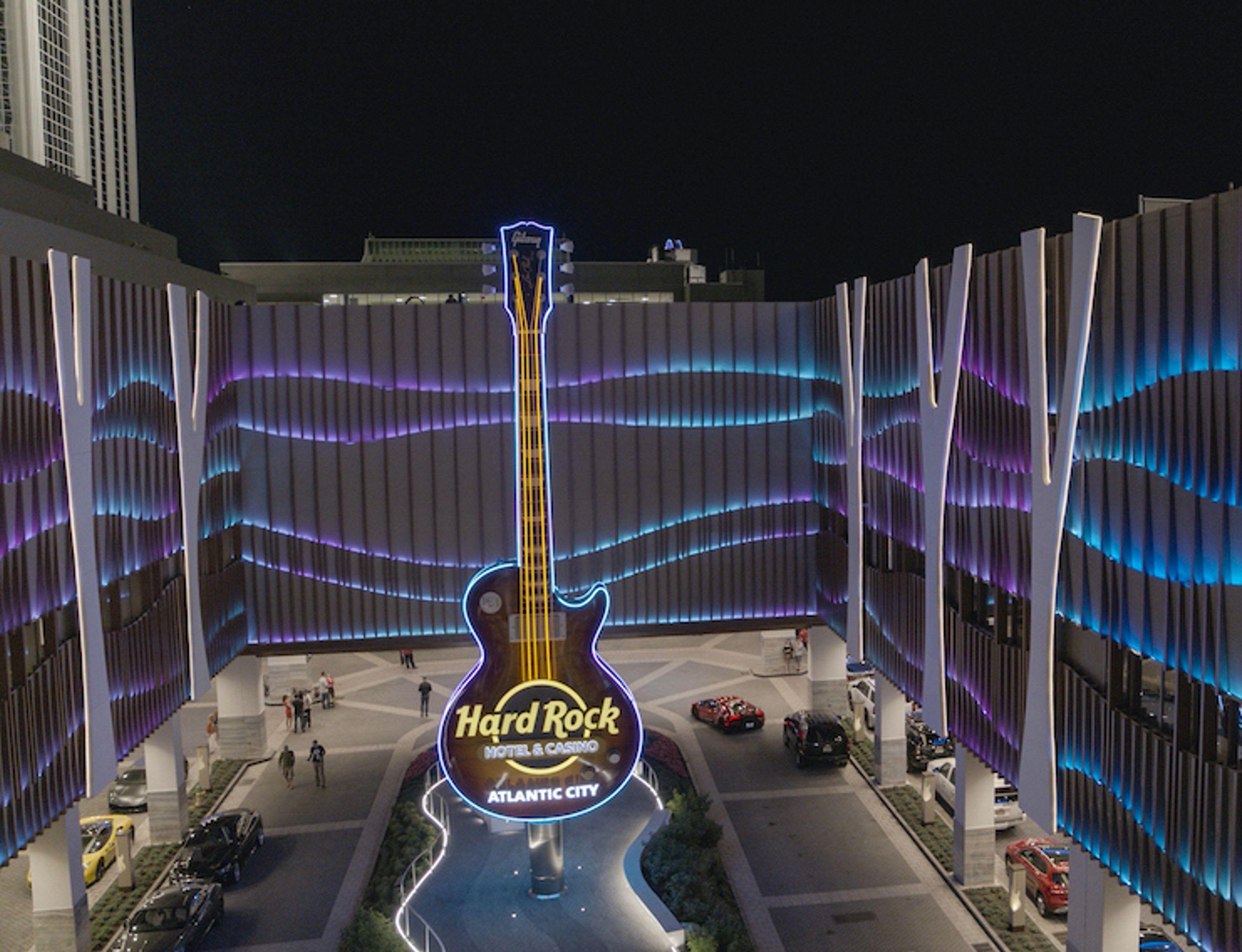
Hard Rock Cafe Atlantic City LED Lighting Facade
Software Decisions
The method you choose to use for delivering data to your LED pixel controllers will depend on the functionality you require, as well as practical decisions like external overrides. If the lighting display needs to run continuously, then software will also need to be set up so that it can accomplish this. If the display requires precise timing elements, then perhaps a scheduler might be needed to trigger sequenced shows. If the display is to be interactive, then it might require a method for triggering sequences based on external sensor data. If the intensity, rate or playback status of a sequence ever needs to be changed, then the software should be accessible, or equipped with external override devices.
Hardware Decisions
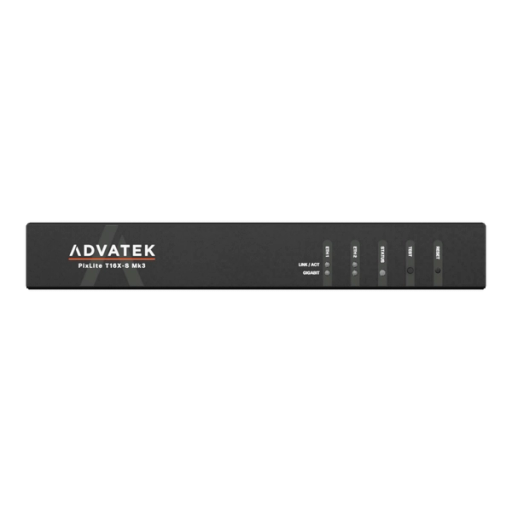
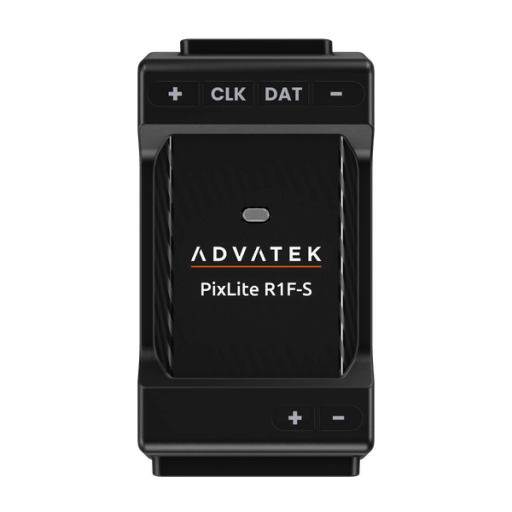
Controllers, power supplies, wiring and network design are all key components of your lighting façade using pixel LEDs. Although not seen by people, these will be the brains behind the display, having the potential to determine the quality of your display. If the display covers a large area, then perhaps a is needed, allowing you to centralize the location of all transmitters, and position receivers where the lights are. This will then require decisions to be made as to which power supplies you will use, depending on your lights of choice. Wiring should be neat and efficient, using the correct gauge wire of an appropriate length. Your system of transmitters, receivers, servers, and any other equipment you have should be able to talk with each other on a well-designed and secure local area network.
If you’re keen to find out how you can light up your commercial business, home or unique space, with the lighting consultants team here at Advatek Lighting. We’ll help bring your lighting ambitions to life and help you sustain your system with a professional pixel LED controller for the ultimate return on investment.
Planning a façade lighting project? We're here to help
Long Range LED Pixel Products
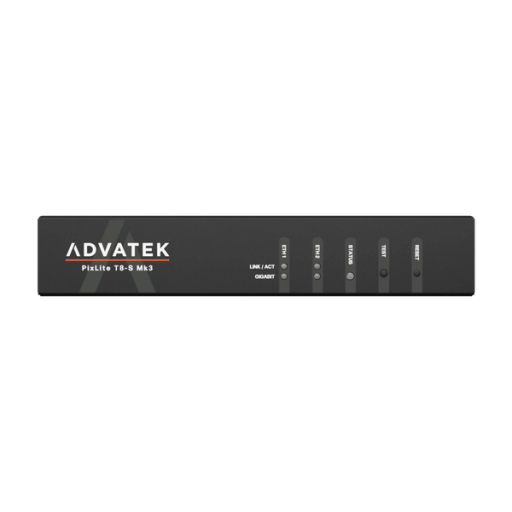
T8-S
With a data transmission range of 300 meters, this user-friendly long range pixel controller system is the high-impact solution for professional installations.
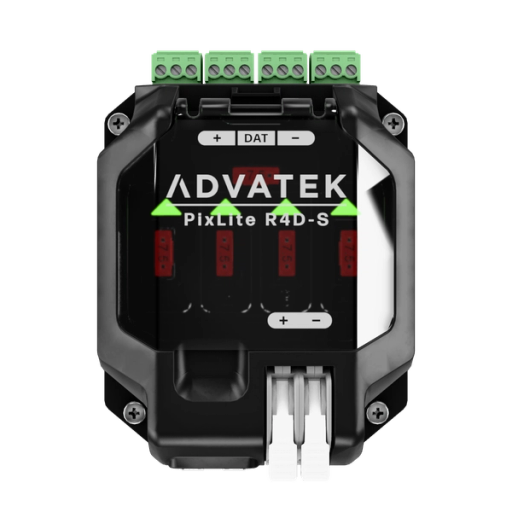
R4D-S
Designed to bring sizable projects to life, the R4D-S receiver works together with the T8-S Mk3 transmitter to drive up to 2,040 RGB pixels for larger-scale installations.
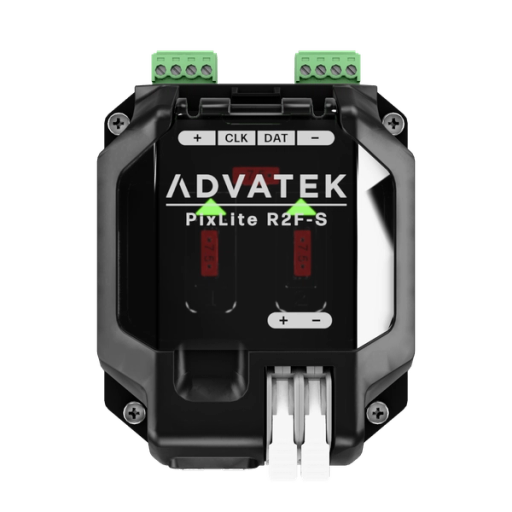
R2F-S
The R2F-S has two outputs, connecting to two runs of pixels and the long-range potential allows receivers to be located up to 300 meters away from the transmitter.